
Maturity Models: A Guide for Scalable Implementation
Author: Uriah Hakala
In the world of Salesforce implementations (and beyond), maturity models help ensure you pick the right solution for your business now — and map a path for growth over time.
Maturity models give organizations a structured way to assess their current state, identify gaps, and plan and scale for optimized operations and digital transformation. These models are especially helpful when implementing enterprise platforms, because if you don’t know where you are, you risk overspending on tools you’re not ready to use or underbuilding a solution that won’t scale.
What Are Maturity Models?
A maturity model is a framework that illustrates how an organization’s capability in a particular domain evolves over levels and time. It identifies specific stages of growth, and what it takes to move from one level to the next.
It typically involves:
- Assessment of current state
You gain an objective picture of your existing maturity: process maturity, data readiness, governance, technology stack. - Target state and gap identification
With your current state mapped, you can isolate what needs fixing to evolve into “where you need to get”: integration siloes, manual workflows, governance weaknesses - Roadmap to optimized operations
You get a plan with actionable steps for how to progress from one level to the next: which capabilities to build and prioritize, which use‑cases to pilot, how to scale. - Investment control
By knowing your maturity level, you can align your investment to what you need rather than overspending on advanced solutions you can’t yet support. - Scalable progression
Maturity models promote incremental growth rather than “big‑bang” deployment. They help you build the foundation first, then layer sophistication later.
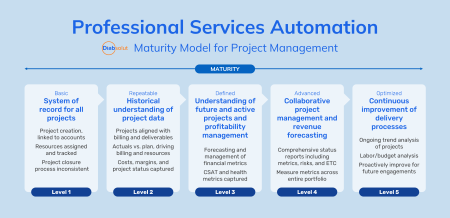
In essence, maturity models convert broad goals like “optimized operations” or “digital transformation” into structured paths and tangible steps.
Understanding Your Maturity Is Crucial for Salesforce Solution Selection
- If your maturity is low, but you choose an enterprise‑scale Salesforce solution with advanced features, you risk overspending, and your solution will sit unused or underutilised.
- If your maturity is already high, but you choose a minimal pilot solution, you risk underbuilding and miss out on value because your architecture can support more, but you didn’t invest accordingly.
By aligning solution choice with maturity level, you avoid both of those extremes: you invest the right amount, build the right capabilities, and maintain a growth path.
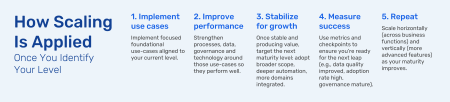
Maturity Models Aren’t One-Size-Fits-All
Choosing the right Salesforce or Certinia solution requires more than a feature checklist. Any and every client sits at a different maturity level and has unique needs. Whether you’re just validating a use case or you’re ready for platform‑wide deployment, there’s a fit to find, ranging from pilot‑stage initiatives to full enterprise scale programs.
Each area of your business may even sit at a different level of readiness. For example, your field operations might be ready for predictive automation, while your customer service processes are still largely manual.
Real-World Example: Salesforce’s Agentic Maturity Model
Salesforce’s Agentic Maturity Model outlines four levels of maturity (for AI/agentic use‑cases).
Here is a quick breakdown:
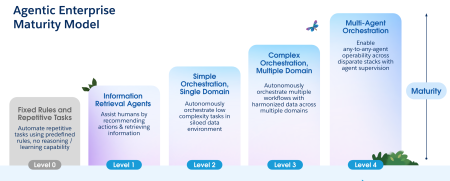
It starts small, grows through increased complexity and integration, and ends with a scalable, intelligent system. This structure helps organizations avoid jumping straight to an advanced solution they aren’t ready for, or missing value by underutilizing their potential.
While this model is framed for agentic AI, the concept applies broadly across Salesforce solutions. At Diabsolut, we adapt this style of maturity progression to each solution we offer (service cloud, field service, AI‑augmented service, etc). We align each client’s “position” on the maturity scale and define future steps accordingly.
How a Customer Benefits from Using Maturity Models
Adopting a maturity-based approach helps organizations:
- Avoid costly missteps. You won’t overspend on capabilities you’re not ready to use or under-build a platform that won’t scale.
- Gain clarity. You see not only “what you are” but “what you can become”.
- Build momentum. With clear wins at each stage, you can show progress and secure ongoing investment.
- Stay adaptable. As your organization evolves, so does your plan. Maturity models support flexible, phased growth.
- Align business and technology. When roadmap and maturity are defined, you connect investment to business outcomes.
Partnering With a Systems Integrator (SI)
When engaging an SI (systems integrator) for a Salesforce implementation, here are critical points you, as a customer, should understand:
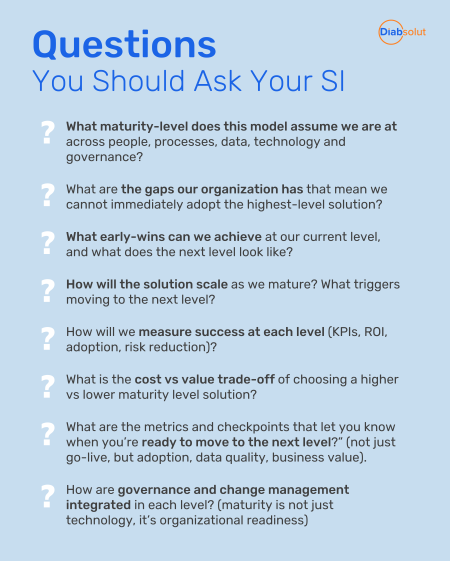
Maturity modeling should be part of the conversation from the start. A good SI will recommend a starting point and build a roadmap tailored to your goals, with short‑term wins (12‑18 months) and medium‑term progression (24‑36 months) aligned to maturity steps.
Next Steps: Readiness Beyond Technology
Understanding your maturity level is more than a technical exercise. By aligning solution choice to your maturity level, especially in a complex platform ecosystem like Salesforce, you avoid overspending and underbuilding.
In summary:
- A maturity model gives you a clear progression path for the future, not just a checklist for today.
- They help you identify gaps and focus your investments smartly.
- Success depends on more than technology. It includes people, processes, culture and governance.
- It’s a long‑term journey with continuous improvement, not a one‑time project.
- Choosing or tailoring the right model is key for ongoing success.
Ready to see where you stand? Let’s start the conversation.
At Diabsolut, we apply maturity‑model thinking across our full suite of solutions (from pilot stage to enterprise scale). And we offer free tailored readiness assessments to help you do just that. Depending on your focus, we can guide you with:
- AI Readiness Assessment: See where you stand with AI and intelligent service enablement.
- Next-Gen Service & Field Service Readiness Assessment: Evaluate your maturity in workforce, scheduling, and asset management solutions.
- Certinia AI Readiness Assessment: Identify how ready your organization is for AI-led financial and operational optimization. (Coming Soon)